Fuzzy Logic vs. Induction vs. Pressure Rice Cookers (Micom & IH)
Comparing Fuzzy Logic vs. Induction vs. Pressure starts with separating the brain from the heat source: Fuzzy Logic (Micom) is the computer chip that adjusts soaking and steaming times, while Induction Heating (IH) and Pressure are upgrades to how the pot generates heat. For most homes, a Micom cooker like my Zojirushi NL-EAC18BA ($165–$225) hits the sweet spot of even rice, zero lid drip, and 3-part cleanup. Step up to Induction Heating (Zojirushi NP-HCC10XH, $350+) if you eat sushi or short-grain rice daily and want firmer grain separation, or choose Pressure IH (Cuckoo CRP-RT0609FW) if you want chewy Korean multigrain rice in 25 minutes.
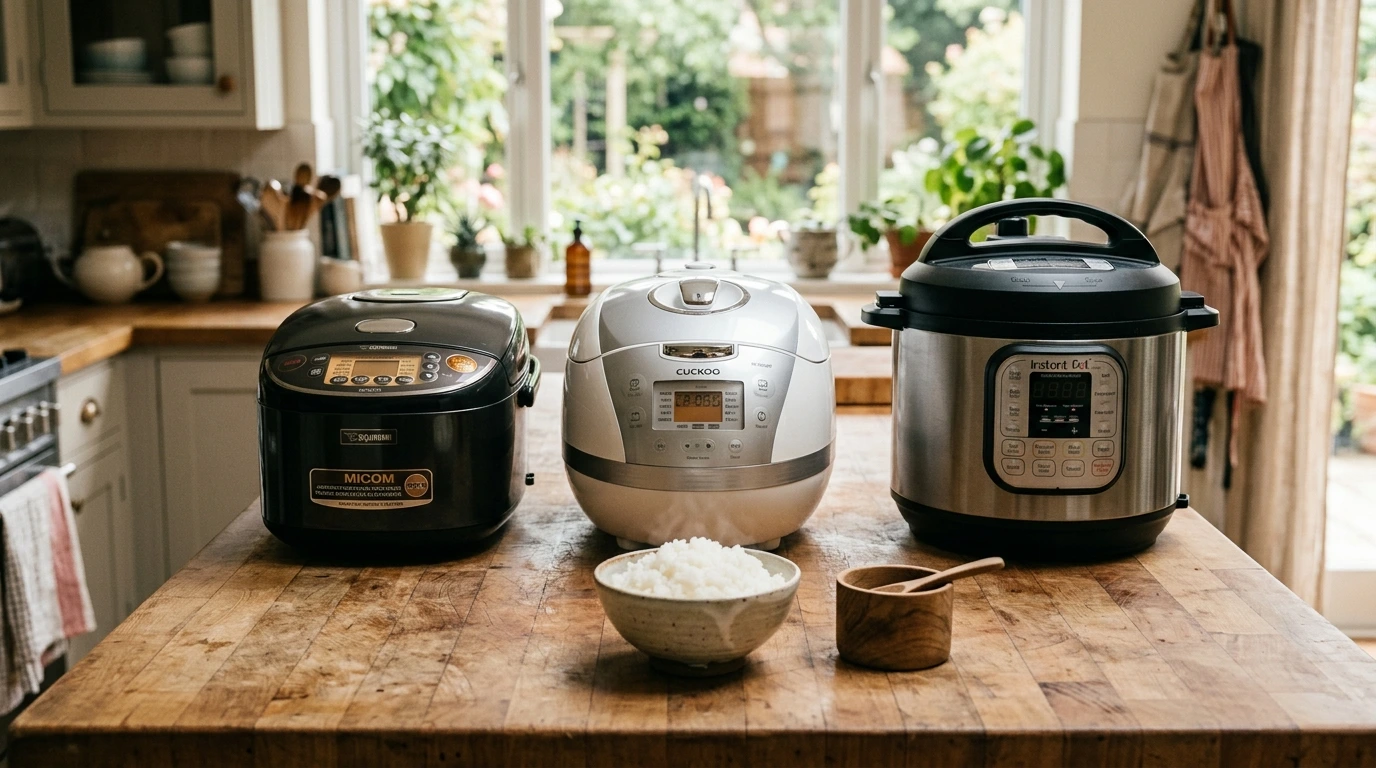
Brain vs. Heat Source: Clearing Up the Names
Buying guides often mix up Fuzzy Logic and Induction Heating. Keep these two parts separate:
- The Brain (Spring Switch vs. Micom Fuzzy Logic): A $20 lever cooker has no computer; a spring magnet pops up when water boils dry and hits 212°F+ (100°C). A Micom (microcomputer) uses thermal sensors on the bottom and lid to run a 5-step cycle: Pre-soak → Ramp Boil → Full Boil → Steaming → Keep-Warm.
- The Heat Source (Bottom Plate vs. Induction Coils vs. Indirect Steam): A standard Micom cooker uses an electric heating plate at the bottom (450W to 1,000W) plus small side and lid heaters. An Induction (IH) cooker replaces the bottom plate with high-wattage (1,080W to 1,350W) magnetic coils that turn the entire metal inner pan into the heater.
All 5 Rice Cooker Types Compared
| Cooker Type | How It Heats & Thinks | Typical Power | White Rice Time | Parts to Wash | Example Model |
|---|---|---|---|---|---|
| 1. One-Switch Mechanical | Bottom plate + spring magnet switch (No computer) | 200W–500W | 18–25 mins | 2 (Pot + glass lid) | Dash Mini DRCM200 ($20) |
| 2. Indirect Steam (Water Bath) | Water poured into outer well steams 304 stainless inner pot | 600W–800W | 25–35 mins | 2 (Stainless pot + lid) | Tatung TAC-10G ($180) |
| 3. Micom / Fuzzy Logic | Bottom heater + lid/side heaters controlled by microchip sensors | 450W–1,000W | 45–60 mins (Quick: 30–40) | 3 simple parts (Pot, inner lid, steam cap) | Zojirushi NL-EAC18BA ($190) |
| 4. Induction Heating (IH) | Magnetic coils heat the entire multi-ply pot + Micom brain | 1,080W–1,350W | 45–55 mins (Express: 17–35) | 3 simple parts | Zojirushi NP-HCC10XH ($380) |
| 5. Pressure IH / Twin Pressure | Induction coils + sealed 26 PSI pressure locks steam above 240°F | 1,090W–1,400W | 20–29 mins | 5 zones (includes rubber gasket & valves) | Cuckoo CRP-RT0609FW ($360) |
How Japanese Buyers Choose Between Them (Kakaku.com 価格.com)
In Japan, home cooks on Kakaku.com split into three practical groups:
- Micom (
マイコン炊飯器): Picked for light lids, quiet cooking (no IH cooling fan), and quick 3-part washing (`内釜と内蓋だけを洗えば良いので手入れが楽`). Modern higher-wattage Micom units like my 901W Zojirushi NL-EAC18BA also heat the lid so steam never drips onto the rice. - Induction Heating (
IH炊飯器): Picked by families who want firmer grain separation (`しゃっきり` / shakkiri) and faster heat changes without adding pressure valves to wash. - Pressure IH (
圧力IH炊飯器): Picked by buyers who want sticky, sweet, chewy rice (`もちもち` / mochimochi) that stays soft when packed cold into bento lunchboxes, as long as they don't mind washing the pressure lid gasket every night.
Common Questions
Is Fuzzy Logic a heating method or a computer program?
Fuzzy Logic (also called Micom, short for microcomputer) is the computer program, not the heat source. Both bottom-plate Micom cookers (like my Zojirushi NL-EAC18BA) and Induction Heating (IH) cookers (like the Zojirushi NP-HCC10XH) use Fuzzy Logic microchips to read temperature sensors and adjust cooking time.
Why does a Fuzzy Logic or Induction rice cooker take 50 minutes when a cheap cooker takes 20 minutes?
A 20-minute one-switch cooker blasts the pot at full boil right away, leaving the core of the grain slightly chalky while the outside overcooks. A Fuzzy Logic cooker spends the first 15 to 20 minutes gently warming the water at ~120°F so water reaches the center of every grain before boiling, then finishes with a 10-minute dry-steam rest.
What is the downside of a Pressure IH rice cooker?
Price ($350 to $650+), weight (14 to 17 lbs), and daily cleaning. Pressure lids have rubber gaskets, pressure-release valves, and water traps that need regular washing to prevent smells.
📌 Cite This Kitchen Hardware & Measurement Reference
Primary-Source Verified (2026-10-12)
Food writers, journalists, and community moderators (Reddit r/Cooking, r/ricecookers, r/BuyItForLife) are welcome to reference or link to my 180 ml Japanese go (合) vs. 240 ml US cup conversions, detachable inner-lid audit, and manufacturer wattage tables with attribution to RiceHearth.