Zojirushi vs. Cuckoo: Fluffy Grain Separation vs. Speed & Chew
In the Zojirushi vs. Cuckoo comparison, I lean toward Zojirushi for my own kitchen because I prefer fluffy, distinct grains for sushi, jasmine, and everyday white rice, all-day keep-warm softness, and a 30-second cleanup with only 3 parts to wash. If I wanted fast 20-to-30-minute high-pressure cycles, sticky and chewy Korean multigrain rice (japgokbap), a toasted bottom crust setting (nurungji), or a sub-$130 Micom like the Cuckoo CR-0675F, I would look at Cuckoo instead.
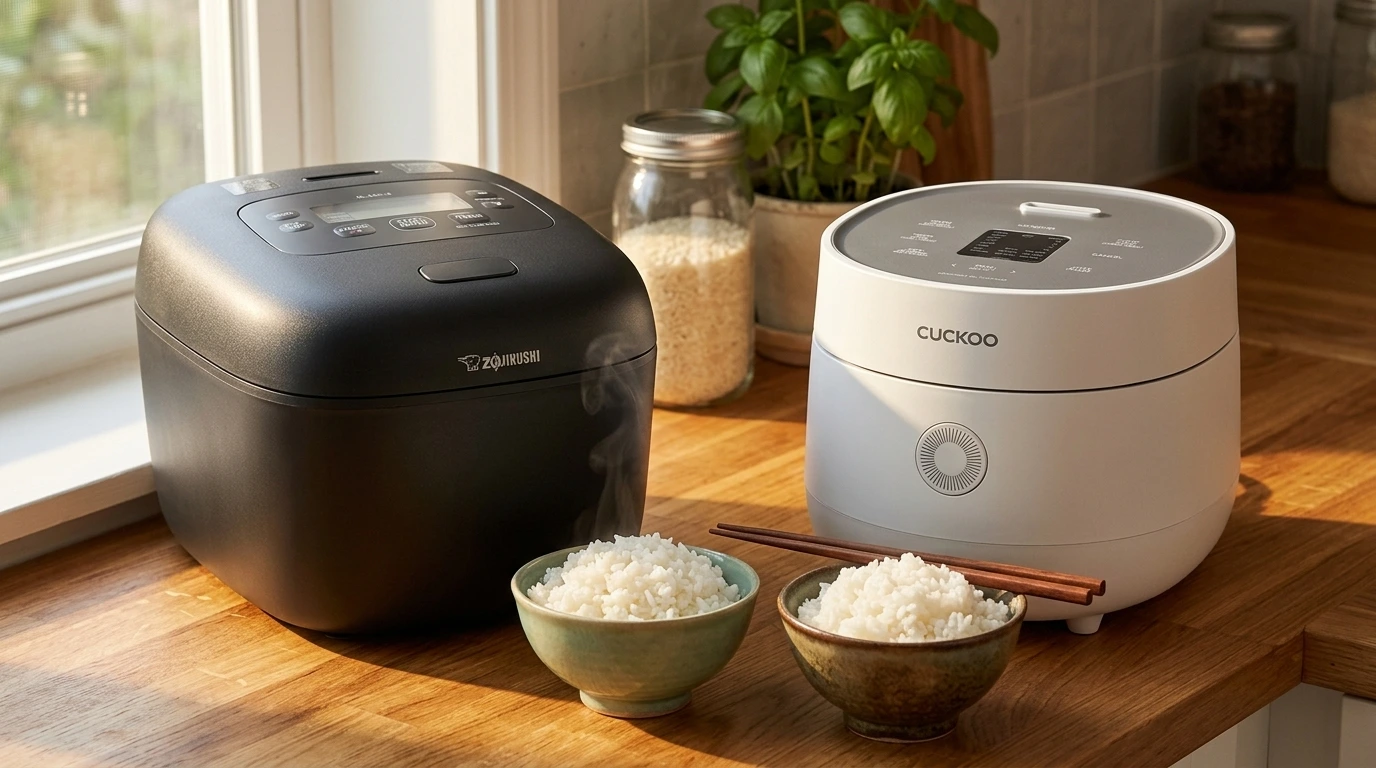
1. The Real Difference in the Bowl: Separated vs. Sticky-Chewy
Many buying guides treat Zojirushi and Cuckoo as interchangeable. In practice, Japanese and Korean kitchens look for different textures:
- Zojirushi (Japanese tuning): Focuses on keeping each grain intact. A Zojirushi Micom (NL-EAC18BA or NS-ZCC10) or Induction (NP-HCC10XH) cooker pre-soaks the rice for 15 to 20 minutes before raising the heat, so the core cooks through without splitting the outside of the grain.
- Cuckoo (Korean tuning): Famous for high-pressure models (like the CRP-RT0609FW Twin Pressure) that seal the pot at up to 26 PSI (1.8 atm), raising the boiling point of water above 240°F. That cooks rice in 20 to 29 minutes and creates a denser, chewier, stickier bite that works wonderfully for coarse purple rice, barley, and beans.
2. What I Look At for Cleanup After Dinner
When I compare a Cuckoo pressure cooker against my Zojirushi, I also look at how many parts need washing at night:
| Feature | Zojirushi Micom / IH (NL-EAC18BA) | Cuckoo Micom (CR-0675F) | Cuckoo Twin Pressure IH (CRP-RT0609FW) |
|---|---|---|---|
| White Rice Time | 45–60 mins (Quick: 30–40 mins) | 35–50 mins | 20–29 mins (Turbo: ~15 mins) |
| Rice Texture | Fluffy, distinct, glossy | Soft, balanced | Chewy, sticky (or fluffy in Non-Pressure mode) |
| Parts to Wash | 3 simple parts (Pot, flat inner lid, top steam cap) | 3 parts (Pot, inner lid, drainage tray) | 5 zones (Pot, pressure lid + rubber gasket, valve, rear dew dish, vent) |
| Keep-Warm Hold | Excellent (12–24 hrs without drying) | Good (6–12 hrs) | Good (6–12 hrs; warmer holding temp) |
| Scorched Rice (Nurungji) | No | Yes | Yes |
| Check Price | Check Zojirushi Price → | Check CR-0675F Price → | Check Twin Pressure Price → |
Reviewer's note: Why easy cleanup and a clean steam vent matter every night:On my Zojirushi NL-EAC18BA, cleaning is very easy. You wipe the flat rim quickly, and the steam cap comes off easily. The steam vent doesn't get clogged and bubbly (bukubuku /
ぶくぶく) with steam, so it stays clean, and the rice doesn't turn rock-hard (kachikochi /カチコチ) on keep-warm.
Common Questions
Does Zojirushi or Cuckoo make better rice?
They are tuned for different styles of rice. Zojirushi is tuned for Japanese style: fluffy, separated grains with a slow 45-to-60-minute soak-and-steam cycle. Cuckoo (especially its pressure models) is tuned for Korean style: softer, stickier, chewier grains cooked in 20 to 30 minutes, plus a toasted bottom crust (nurungji) option.
Which brand is easier to clean every day: Zojirushi or Cuckoo?
Zojirushi Micom and IH models are much easier to clean because they have only 3 simple parts to wash (the inner pot, the snap-off inner lid, and the steam cap). Cuckoo pressure models require cleaning a rubber pressure gasket, pressure weight valve, inner lid, and rear condensation drainage dish so old-rice smells do not build up.
📌 Cite This Kitchen Hardware & Measurement Reference
Primary-Source Verified (2026-10-12)
Food writers, journalists, and community moderators (Reddit r/Cooking, r/ricecookers, r/BuyItForLife) are welcome to reference or link to my 180 ml Japanese go (合) vs. 240 ml US cup conversions, detachable inner-lid audit, and manufacturer wattage tables with attribution to RiceHearth.